Jaramillo Petrified Forest National Park
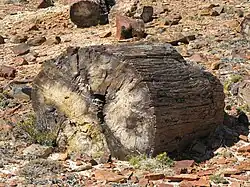
Jaramillo Petrified Forest National Park (officially Parque Nacional Bosques Petroficados de Jaramillo) is a protected natural area in the Patagonia region of Argentina. The park protects an area of petrified forests, created at the beginning of the cretaceous period when volcanic eruptions covered dense forests in layers of lava and ash, turning the trees to stone.
Understand
The park covers an area of about 78,500 hectares.
History
The fossilized trees were discovered in 1925. In 1954, the park was designated a national monument. In 2012, it was expanded and was designated as a national park, becoming part of the Argentina national parks system.
Landscape
The landscape is mostly dry savanna with mountains and rocky canyons.
Flora and fauna
Vegetation is mostly scrub brush that can tolerate dry, arid conditions.
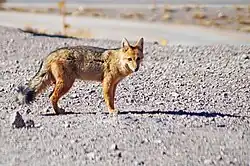
The most common bird in the park is the lesser rhea, a large flightless bird like an emu or ostrich. A number of reptiles live in the park including lizards and snakes. Mammals include the guanaco (a type of llama), armadillos, and small canids such as the culpeo fox and the grey fox.
Climate
Cold, dry conditions are common in the park though summer high temperatures can reach as much as 40 °C in summer and as cold as −15 °C in winter. The climate is dry with most precipitation occurring in summer, though snowfall is possible in winter months.
Get in
Fees and permits
Admission to the park is free.
Get around
See
A small site museum contains paleontological exhibits.
Do
Buy
There are no stores in the park.
Eat and drink
No restaurants are available in the park. Visitors should bring food and drink. Picnic tables are available near the park visitor center.
Sleep
No camping or lodging facilities are provided in the park. The nearest towns with available lodging are Puerto Deseado, Caleta Olivia or Fitz Roy.